
Varicose veins
About varicose veins
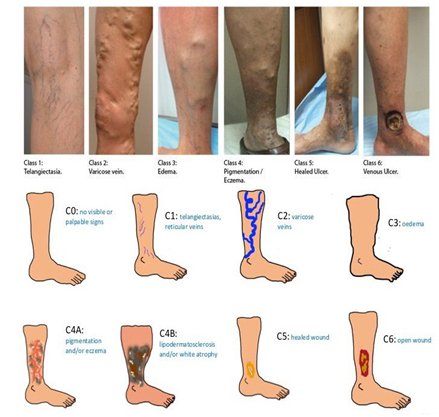
Varicose veins are swollen, enlarged and tortuous veins – usually blue or dark purple – that usually occur on the legs. One in three people over the age of 35 are affected. Most people are totally asymptomatic.
Common symptoms include:
- aching, heavy and uncomfortable legs.
- swollen feet and ankles.
- muscle cramp in your legs.
- Heavyness, dull dragging pain in the legs – typically in the evenings and feels light after bedrest in the morning.
- dry skin and dark colour changes in the lower leg / ankle(Lipodermatosclerosis).
- Eczema / Itching / Ulcers.
- Bleeding – painless, spontaneous.
Causes of varicose veins
- Weakened / defective vein valves or walls – most common and cause may be unknown.
- Prolonged standing.
- Pregnancy - Although being pregnant can increase your risk of developing varicose veins, most women find their veins significantly improve after the baby is born.
- Previous blood clot (Prior DVT)
- a swelling or tumour in the pelvis.
Diagnosing Varicose Veins
Clinical examination – included history taking about the symptoms and examining the legs. Check for pulses etc.
Duplex Ultrasonography – Vein mapping is the most important test done to diagnose and assess the defect and origins of the varicose veins.
Some patients may require CT / MRI Venography also.
Treating varicose veins
Most varicose veins don’t require any treatment, but if treatment is necessary, your doctor may first recommend up to six months of self care at home, including:
- Using compression stockings
- Taking regular exercise
- Avoiding standing up for long periods
- Elevating the affected area when resting
Surgical treatments may be offered if you have:
- Hyperpigmentation, eczema or ulceration
- Clotted veins
- Bleeding
In-spite of self-care, patients with persisting or worsening symptoms should consult a vascular surgeon, varicose veins can be treated in several ways, the most common being:
- Endothermal ablation – treatment where heat is used to seal affected veins
- Sclerotherapy – this uses special foam to close the veins
- Ligation and stripping – this involves surgery to remove the affected veins
Compression stockings
Compression stockings are specially designed to steadily squeeze your legs to improve circulation. They are often tightest at the ankle and get gradually looser as they go further up your leg.
You usually need to put your compression stockings on as soon as you get up in the morning and take them off when you go to bed.
Compression stockings usually have to be replaced every three to six months. If your stockings become damaged, speak to your GP because they may no longer be effective.
You should be prescribed two stockings (or two sets of stockings if you are wearing one on each leg) so that one stocking can be worn while the other is being washed and dried. Compression stockings should be hand washed in warm water and dried away from direct heat.
Endothermal Ablation
One of the first treatments offered will usually be endothermal ablation. This involves using energy either from Radio-frequency waves (radiofrequency ablation) or Laser (endovenous laser treatment) to seal the affected veins.
Ultrasound-guided foam sclerotherapy
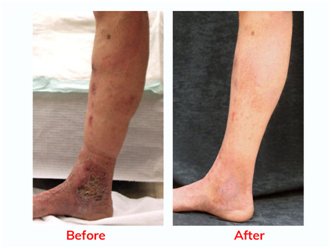
The injection is guided to the vein using an ultrasound scan. It’s possible to treat more than one vein in the same session. After sclerotherapy, your varicose veins should begin to fade after a few weeks as stronger veins take over the role of the damaged vein, which is no longer filled with blood. You may require treatment more than once before the vein fades, and there is a chance the vein may reappear.
Surgery
If endothermal ablation treatments and sclerotherapy are unsuitable for you, you may be offered a surgical procedure called ligation and stripping to remove the affected veins.
Varicose vein surgery is usually carried out under general / Spinal anaesthetic. You can usually go home the same day, but an overnight stay in hospital is sometimes necessary, particularly if you are having surgery on both legs.