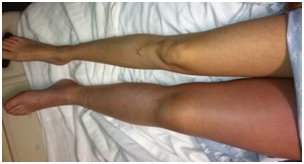

Deep Vein Thrombosis and Pulmonary Embolism (DVT/PE) are often underdiagnosed and serious, but preventable medical conditions.
Deep vein thrombosis (DVT) is a medical condition that occurs when a blood clot forms in a deep vein. These clots usually develop in the lower leg, thigh, or pelvis, but they can also occur in the arm.
The most serious complication of DVT happens when a part of the clot breaks off and travels through the bloodstream to the lungs, causing a blockage called pulmonary embolism (PE). About 25-30% of PE is fatal.
In addition, one-third to one-half of people who have a DVT will have long-term complications caused by the damage the clot does to the valves in the vein called post-thrombotic syndrome (PTS). People with PTS have symptoms such as swelling, pain, discoloration, and in severe cases, scaling or ulcers in the affected part of the body. In some cases, the symptoms can be so severe that a person becomes disabled.
For some people, DVT and PE can become a chronic illness; about 30% of people who have had a DVT or PE are at risk for another episode.
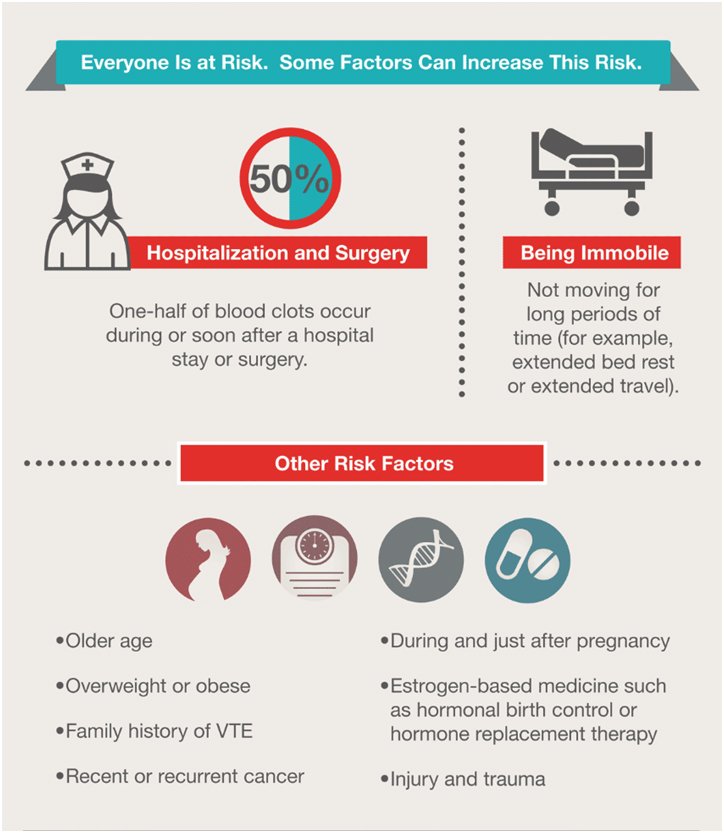
DVT: Swelling, Pain, Tenderness, Redness of the skin
PE: Difficulty breathing, Faster than normal or irregular heart beat, Chest pain or discomfort, which usually worsens with a deep breath or coughing, Coughing up blood, Very low blood pressure, lightheadedness, or fainting.
Anticoagulants
Thrombolytics / Catheter-directed thrombolysis (CDT) with Angiojet/ Penumbra Thrombo-aspiration.
Inferior vena cava filter
Thrombectomy/Embolectomy
Compression stockings - Lifelong