Diabetic Foot Care

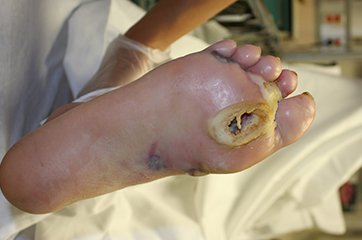
According to the International Diabetes Federation, Atleast 10.5% of Indian adults have diabetes, a disease affecting the way the human body processes glucose. Over an extended period of time, high glucose levels can damage the nervous system, reducing sensation in the feet.

Due to the suppression of the immune response and reduced blood flow to the feet in diabetics, the body may be unable to heal wounds you suffer to your feet. As sensation has already been reduced, if you aren’t checking your feet regularly, you may not realize your feet are injured until it’s too late. If left untreated, bacterial infections can lead to gangrene, which may require amputation to ensure that the infection does not spread to other parts of the body.
What Can I Do?

There are some simple precautions you can take to keep your feet healthy as a diabetic.

  • Check your feet daily.
  • Keep your diabetes under control.
  • Wash your feet daily.
  • Keep your feet moisturized (but no lotion between the toes, as moisture here can create conditions friendly to fungal infection).
  • Encourage circulation in your feet by wiggling your toes and changing positions regularly.
  • Meet regularly with your trusted podiatrist.

If you suffer from diabetes, it is crucial that you ensure foot health by working with your podiatrist to reduce the likelihood of infection and quickly treat any infection that arises. Contact us today to learn how we can help you protect your feet for a lifetime.

Our Services

Title One
Title One
Title One
Title One
Title One

State-of-the-Art Podiatric Therapies

Here are some examples of the advanced treatments we recommend to patients seeking to speed up the post-surgical healing process:

  • Ultrasonic debridement
  • MLS laser therapy: Multi-wave Locked System (MLS) laser therapy uses dual wavelengths of specialized light energy to improve circulation, metabolic activity, and cellular repair and regrowth, relieving pain, reducing swelling, and accelerating recovery.
  • Platelet-rich plasma (PRP) injections: This treatment concentrates beneficial properties in your own blood, then injects it near the surgical site to relieve pain and stimulate the healing process.
  • Shockwave therapy: Also called EPAT or ESWT, shockwave therapy uses a unique set of acoustic pressure waves to stimulate metabolism, improve circulation, and speed up tissue repair at the surgical site.
  • Stem cell therapy: Injecting amniotic stem cells near the surgical site can also be advantageous, promoting accelerated tissue repair and encouraging faster recovery.